What equipment does it need?
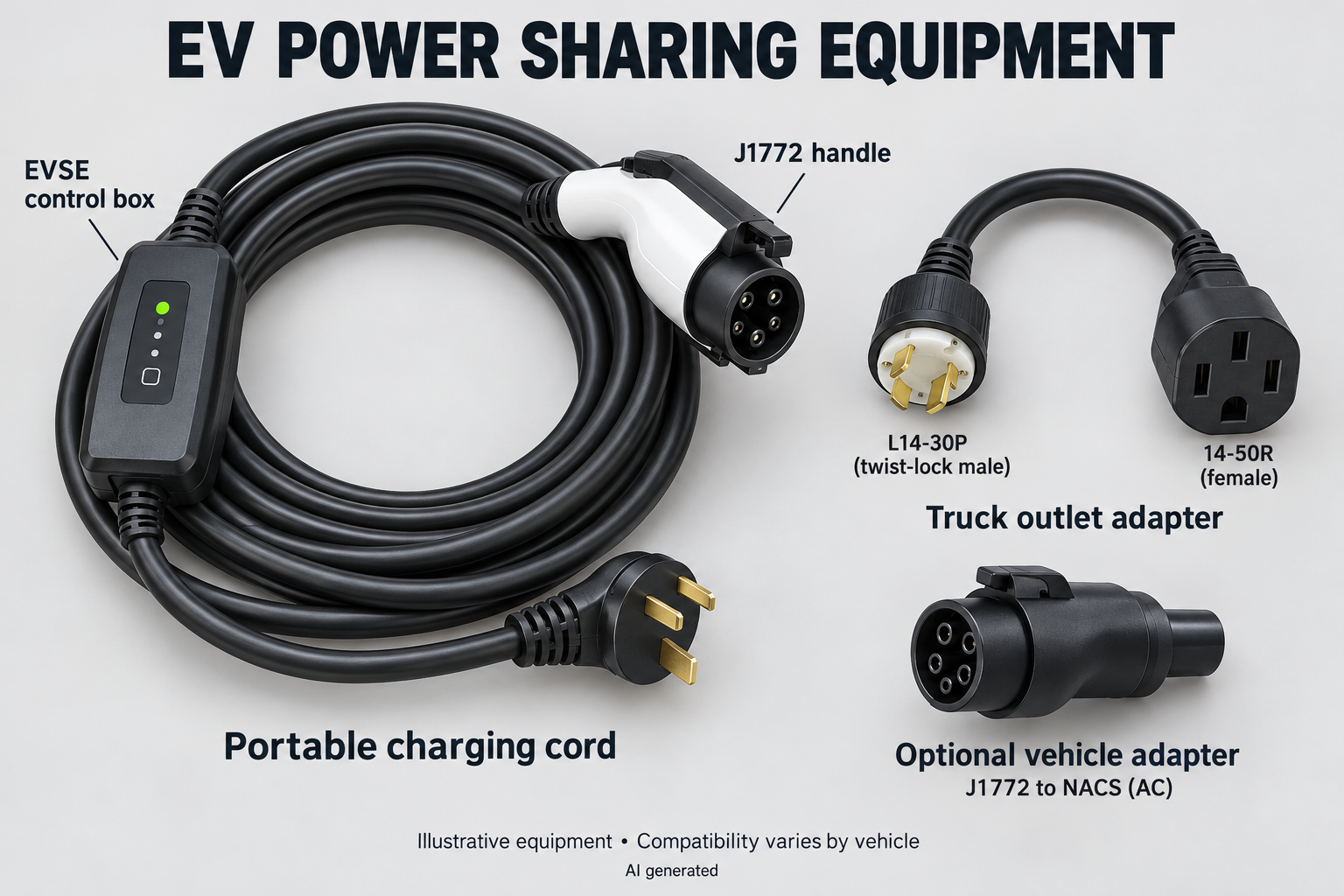
Ford’s documented setup uses an F-150 Lightning equipped with 9.6-kilowatt Pro Power Onboard, the Ford Mobile Power Cord, and an adapter connecting the charging equipment to the truck’s 240-volt outlet. Equipment and compatibility should be checked for the specific model year.
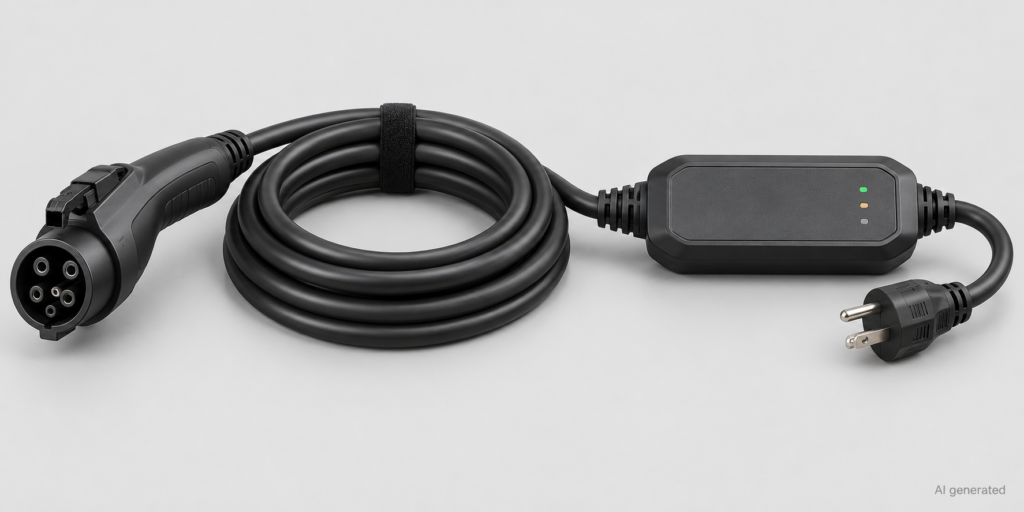
The portable charging cord includes a control unit, often called an EVSE. It manages the charging connection; an ordinary electrical cable alone cannot perform that job.
Where does the cable connect?
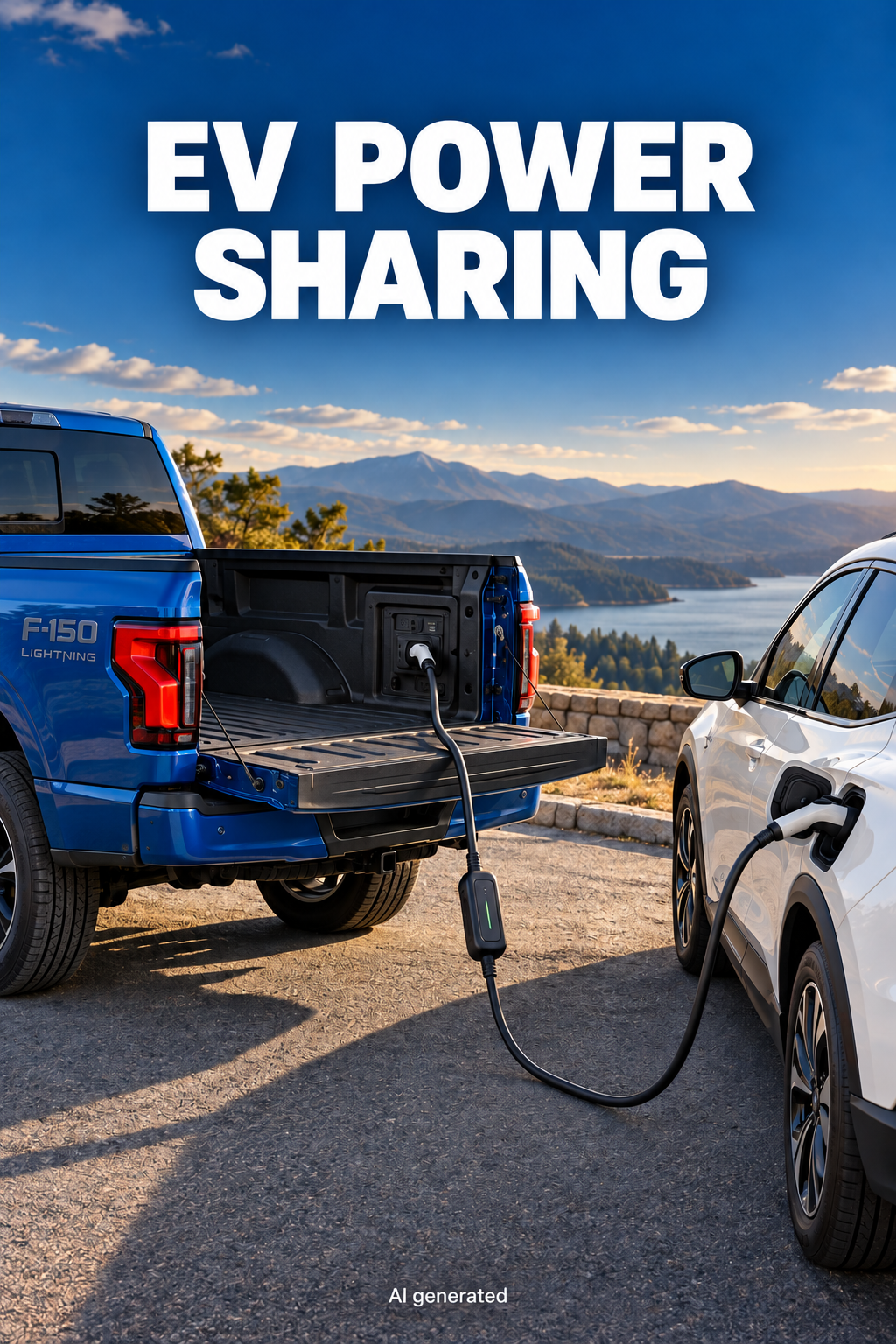
Electricity comes from the truck’s Pro Power Onboard outlet. The portable charging equipment then delivers that power to the receiving EV’s charging port.
The Lightning’s own charging inlet is not the power source for this arrangement. That distinction matters when looking at illustrations of vehicle-to-vehicle charging.
How fast can it charge another car?
This is Level 2 AC charging. Its practical role is providing a useful top-up while the vehicles remain parked.
In its original demonstration announcement, Ford estimated approximately 20 miles of added driving range per charging hour for an extended-range, rear-wheel-drive Mustang Mach-E. That was a vehicle-specific estimate, rather than a guaranteed rate for every EV. Weather, battery condition, vehicle efficiency, and equipment affect the result.
Will it work with other EV brands?
Ford’s documented Mobile Power Cord uses a J1772 connector, allowing it to serve compatible vehicles from other manufacturers. Vehicles with a different inlet may require a manufacturer-approved AC charging adapter. Check the receiving vehicle’s requirements before connecting equipment.
A connector fitting physically does not establish that the complete setup is compatible. The outlet, adapter, charging unit, and vehicle must work together at an appropriate electrical rating.
When could power sharing help?
A driver running low near a charging station could benefit from an extra energy reserve. Families traveling together might also find it useful when one vehicle needs a top-up.
There is a trade-off: energy supplied to the other car comes from the Lightning’s battery, reducing the truck’s remaining driving range. The owner needs to preserve enough charge for their own journey.
Before buying accessories, confirm the truck’s equipment and follow Ford’s instructions for the exact charging cord and adapter. Avoid improvised connections or assuming every portable charger can draw power safely from the outlet.
The BSWAPS perspective
Vehicle-to-vehicle charging shows how an EV can become a useful energy resource for another driver. A compatible cable-and-adapter setup adds flexibility when charging access is limited.
For Lightning owners who already have the required power system, it is an accessory worth understanding before the day someone needs a few extra miles.