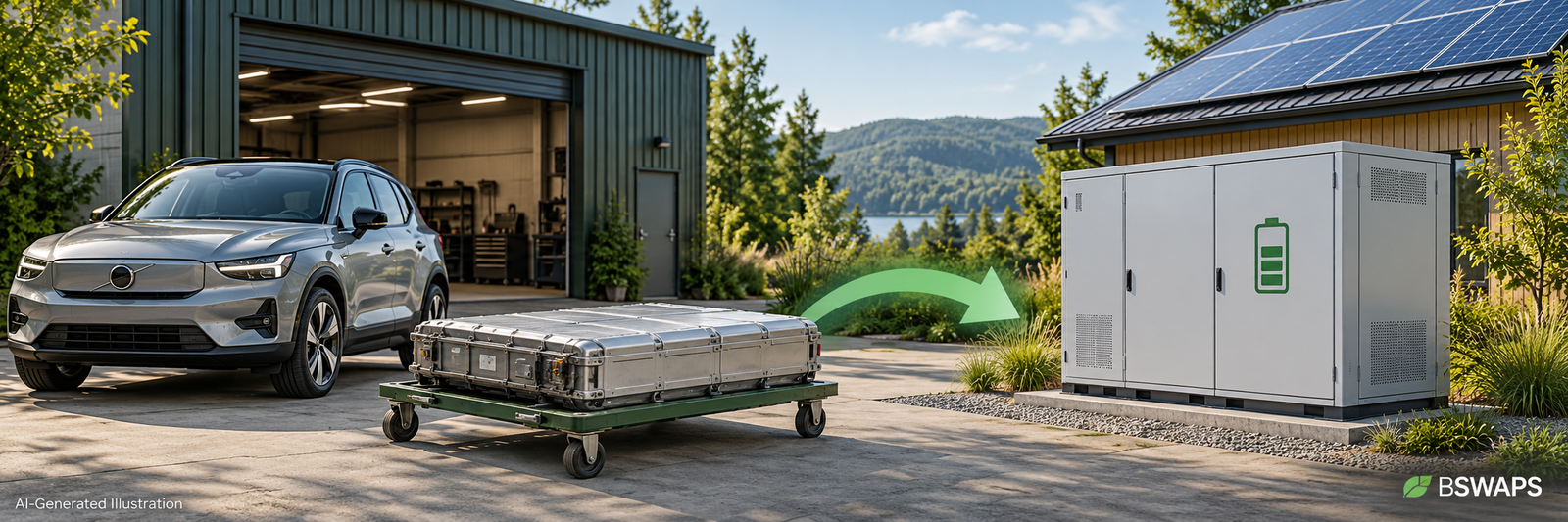
From powering cars to storing solar energy—and eventually recycling.
Assess
Test battery health and safety.
Reuse
Store energy when suitable.
Recycle
Recover valuable materials.
What Happens When an EV Battery Retires?
Leaving a vehicle does not always mean a battery is finished. Qualified specialists assess its condition to determine whether reuse or recycling is appropriate. A battery’s history, condition, and intended application affect that decision.
How Second-Life Battery Storage Works
The U.S. Department of Energy supports projects that integrate retired EV batteries into secondary applications, including stationary energy storage.
Inspect and test: Specialists assess condition and suitability.
Integrate suitable batteries: Qualified teams develop an engineered storage system with appropriate controls and protection.
Store electricity: The system stores electricity for later use, including energy from solar panels where configured.
Suitable batteries may support stationary energy storage. Reuse depends on testing, system requirements, and whether the project is practical.
Recycle
Batteries unsuitable for reuse can enter specialist recycling processes to recover materials. Recovery methods and outputs vary by battery chemistry and facility.
Where Battery Swapping Fits
Battery ownership and reuse decisions depend on the provider’s contracts and operating model. A swapped battery is not automatically ready for retirement: operators may continue using suitable packs in vehicles before assessing other applications.